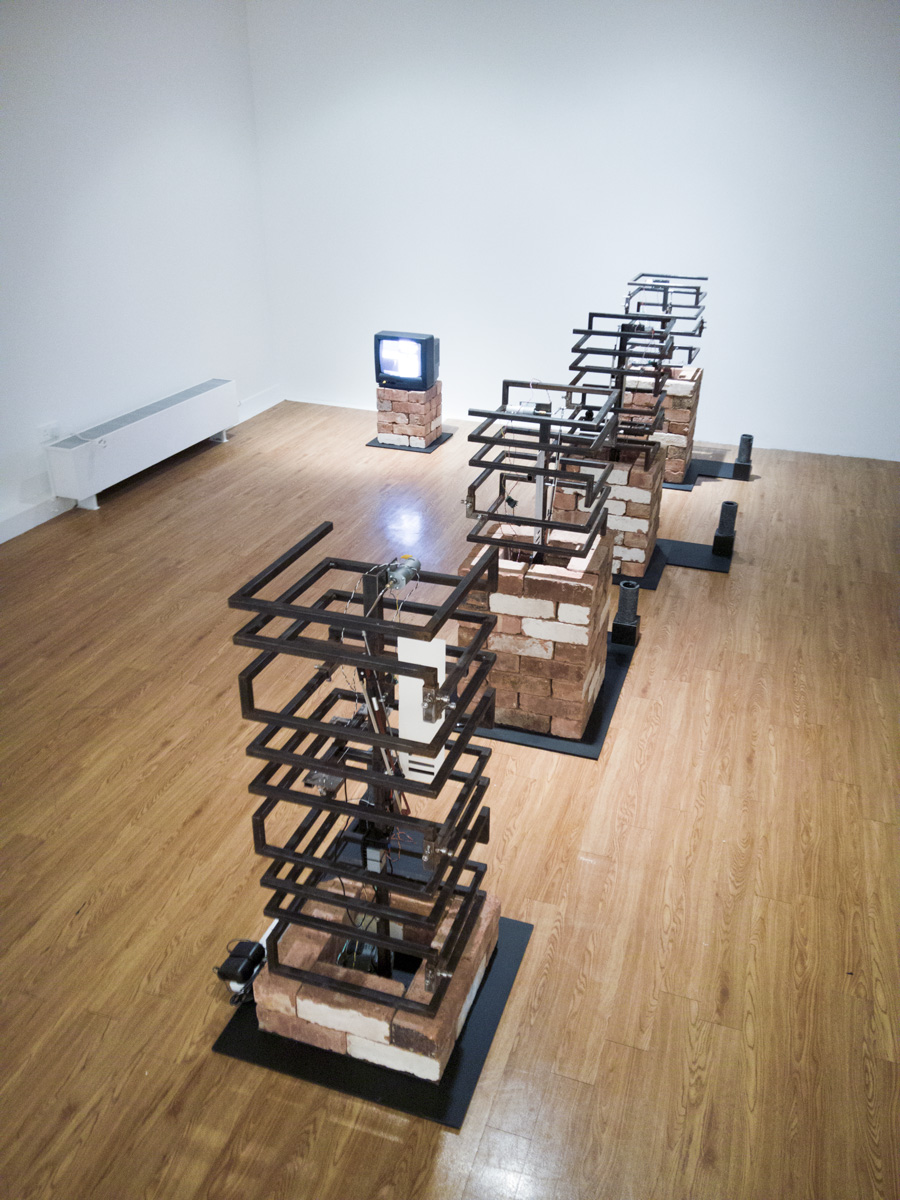
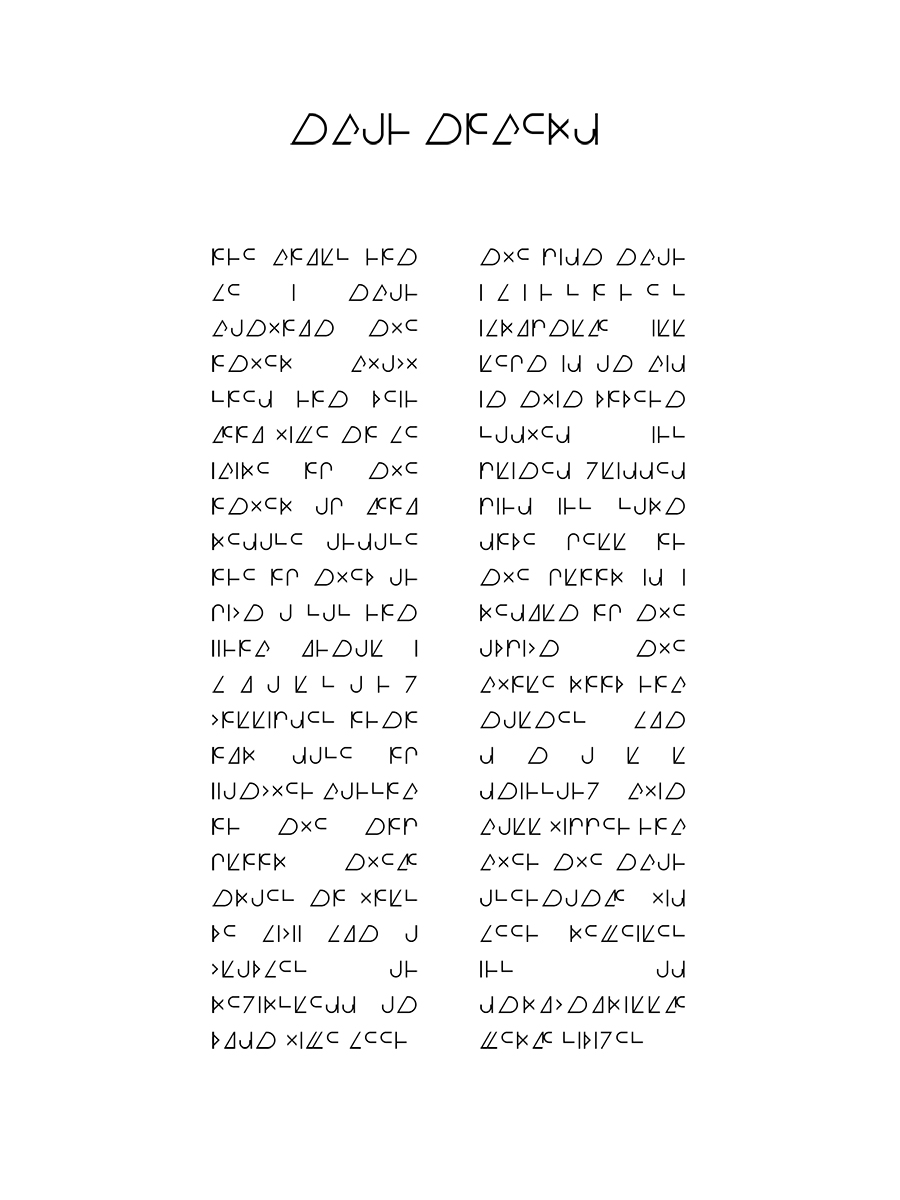
Night is a Day That Fell Short
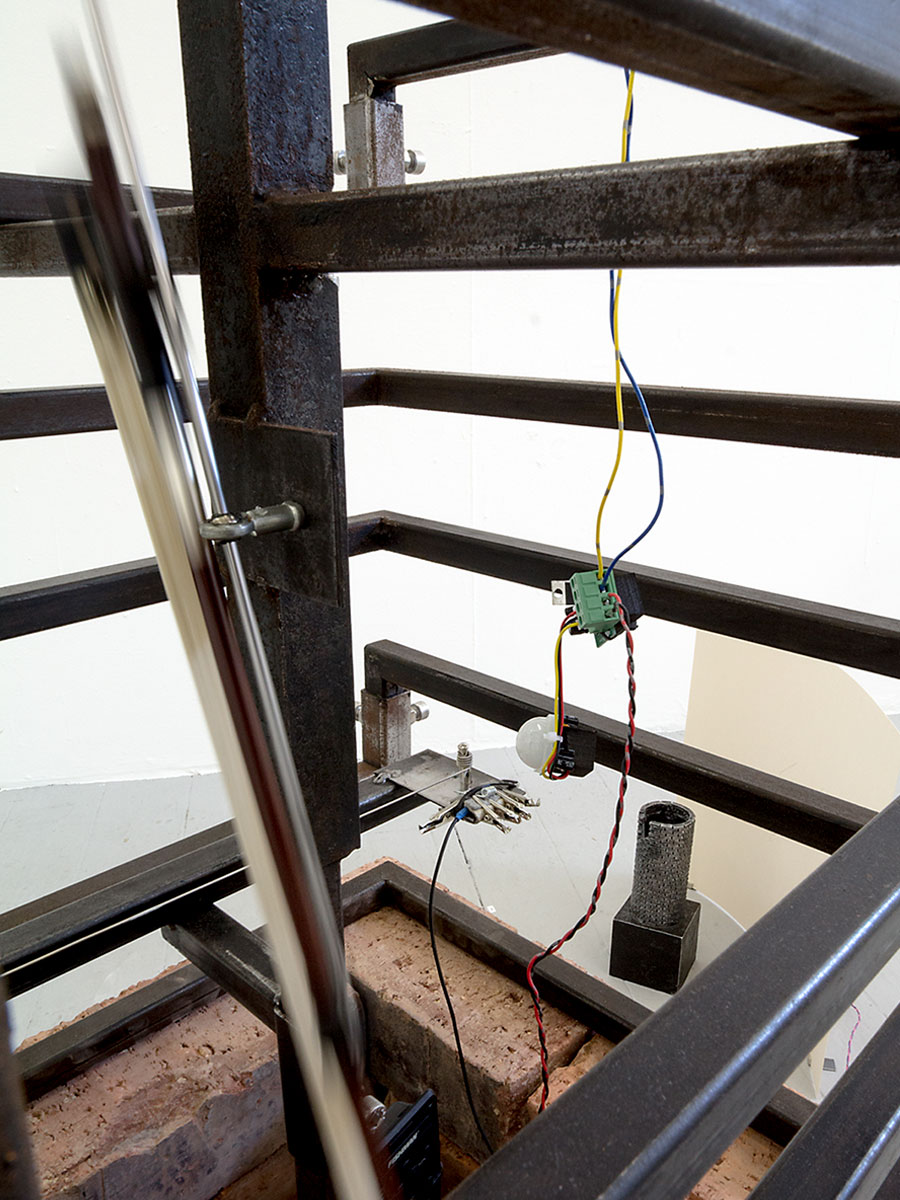
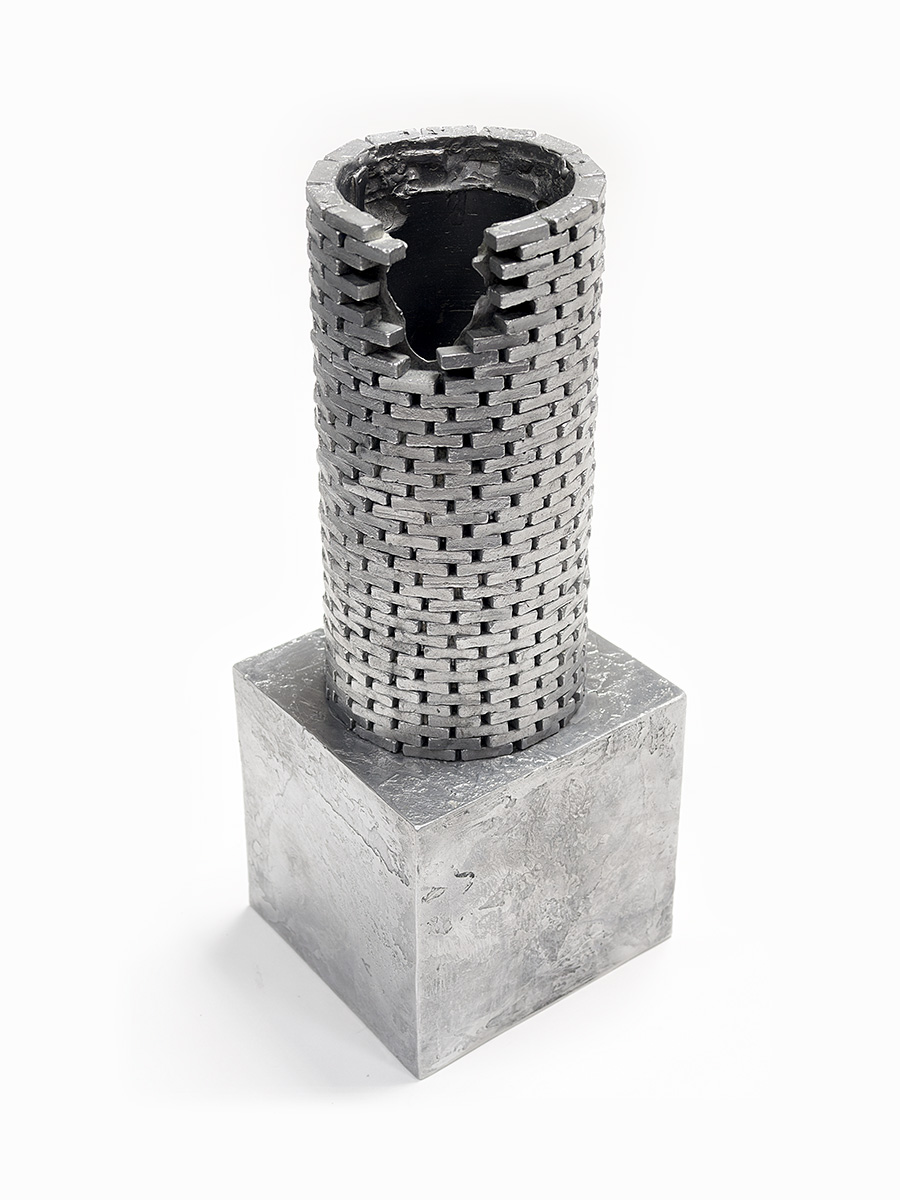
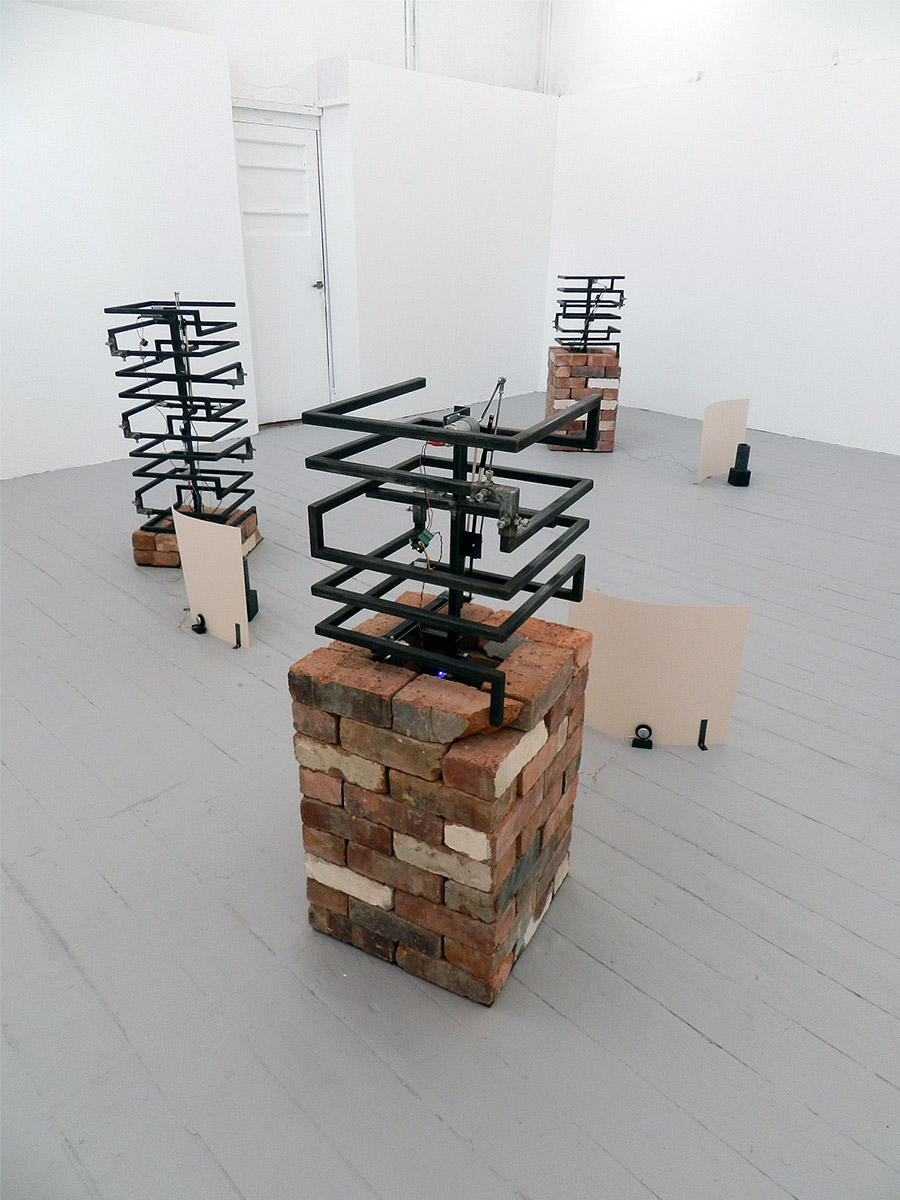
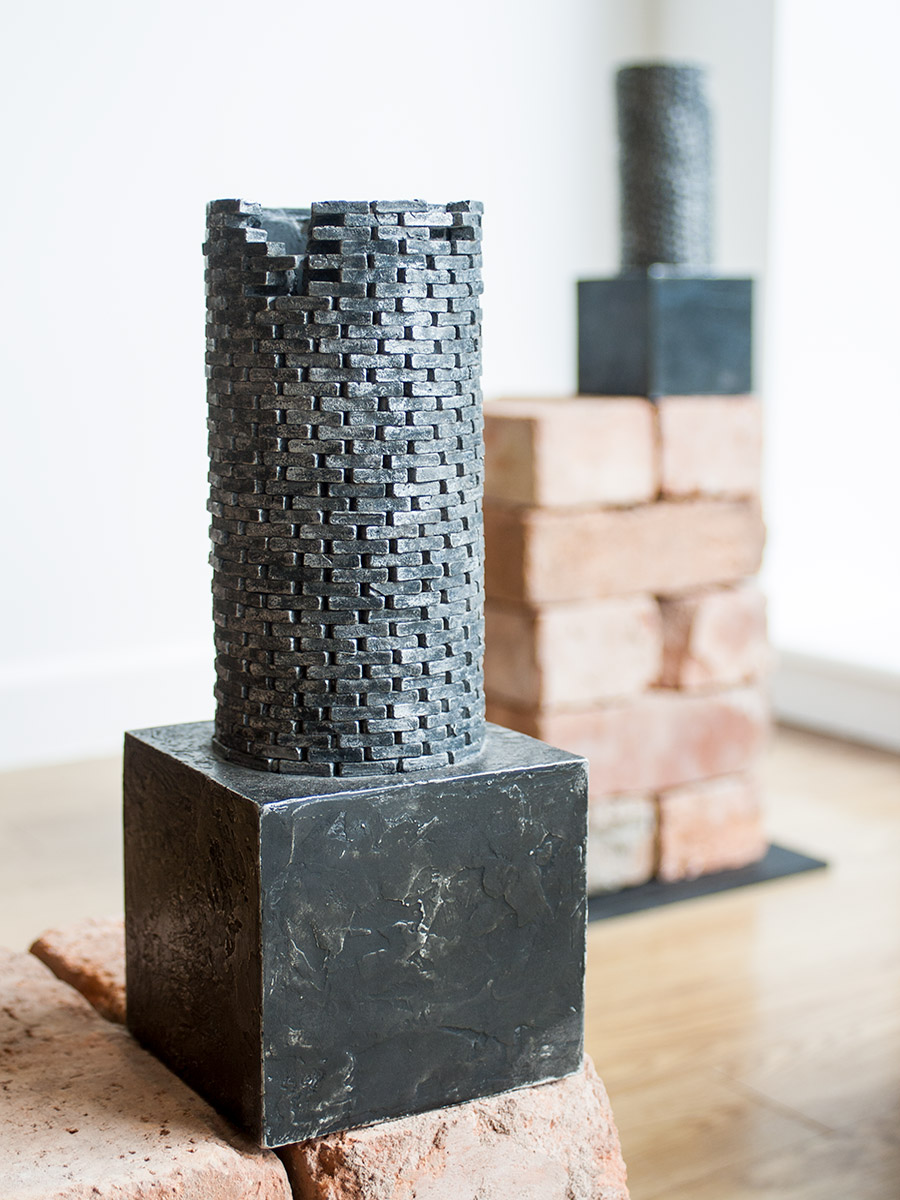
Mild steel, aluminium, electronics, glycerin, PVC, black food dye, dimensions approx. 3 x 6 x 1.2 meters, 2023
Robert C. Turner Gallery, Alfred University, NY, USA
The work draws on Saturn—the “sun of night”—as a counterpart to solar cycles. Through duration and repetition, it turns mechanical motion into a slow record of time.
Balancing industrial mechanism with organic accumulation, the work constructs a closed system that mimics natural processes while remaining fundamentally artificial. It follows the logic of natural cycles, but in its limited understanding replicates form without the intelligence that gives it meaning.
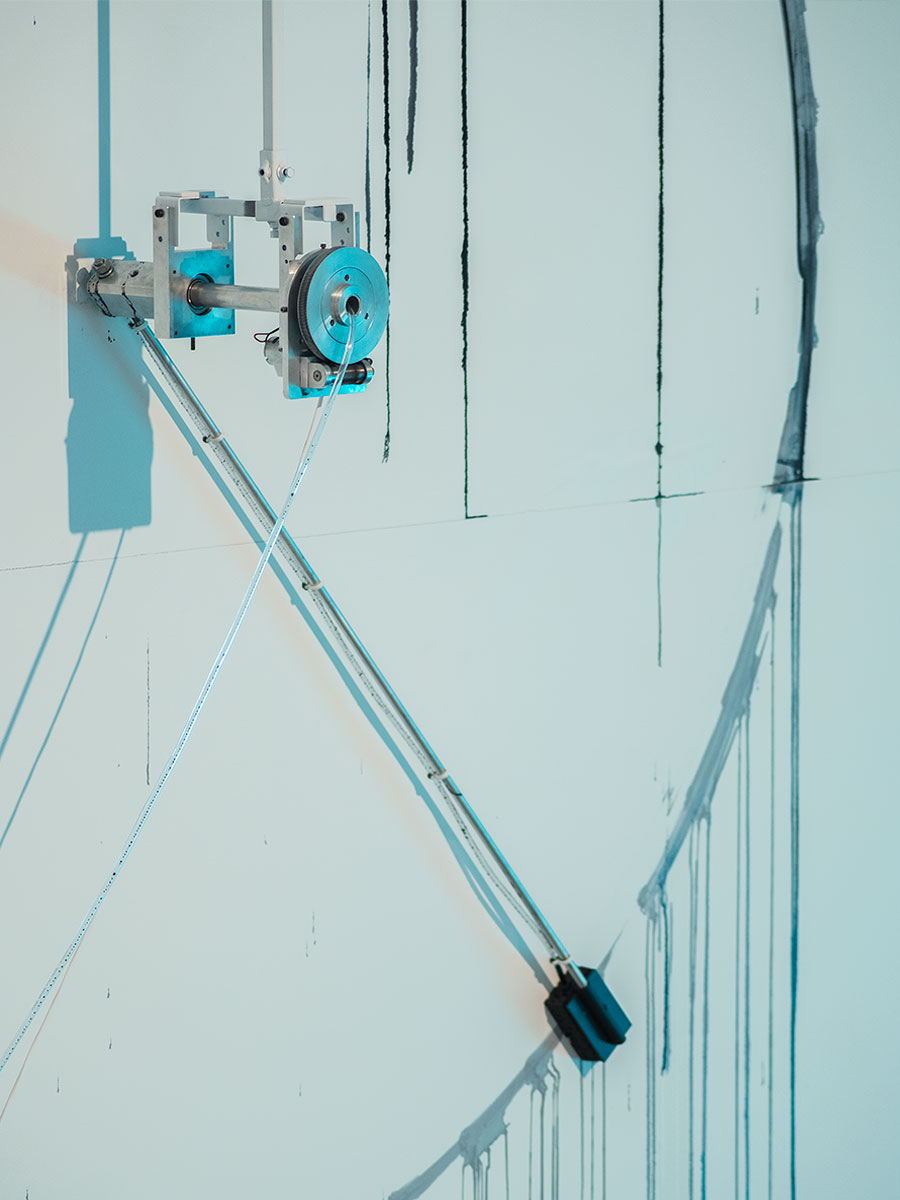
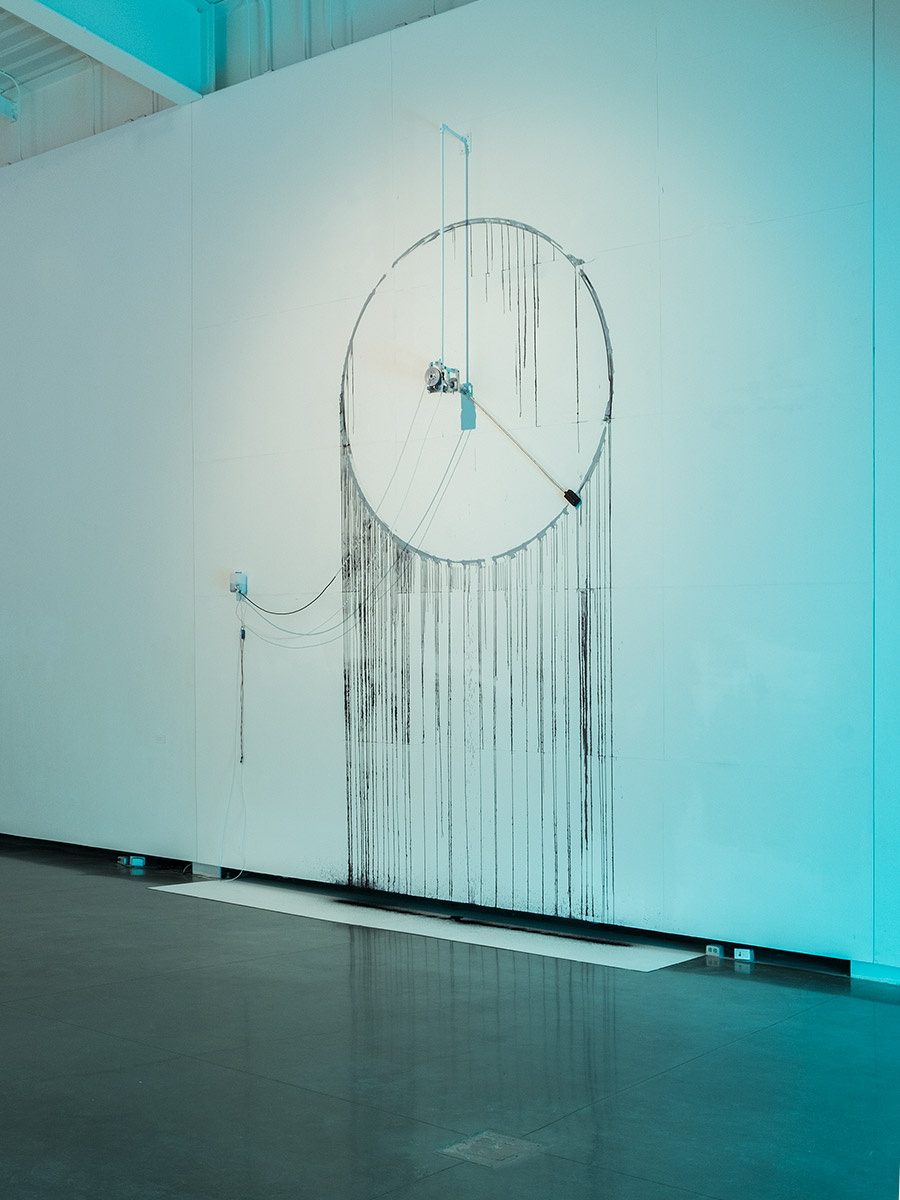
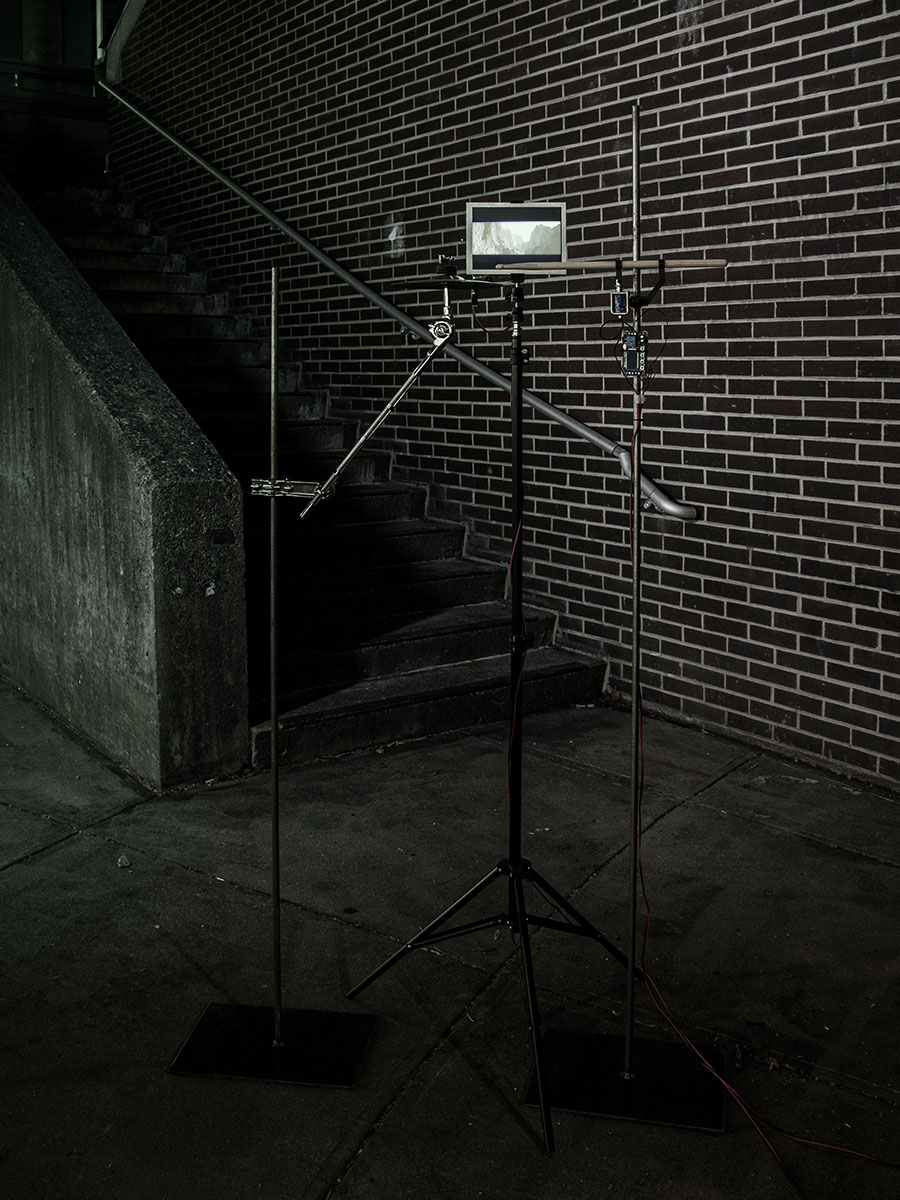
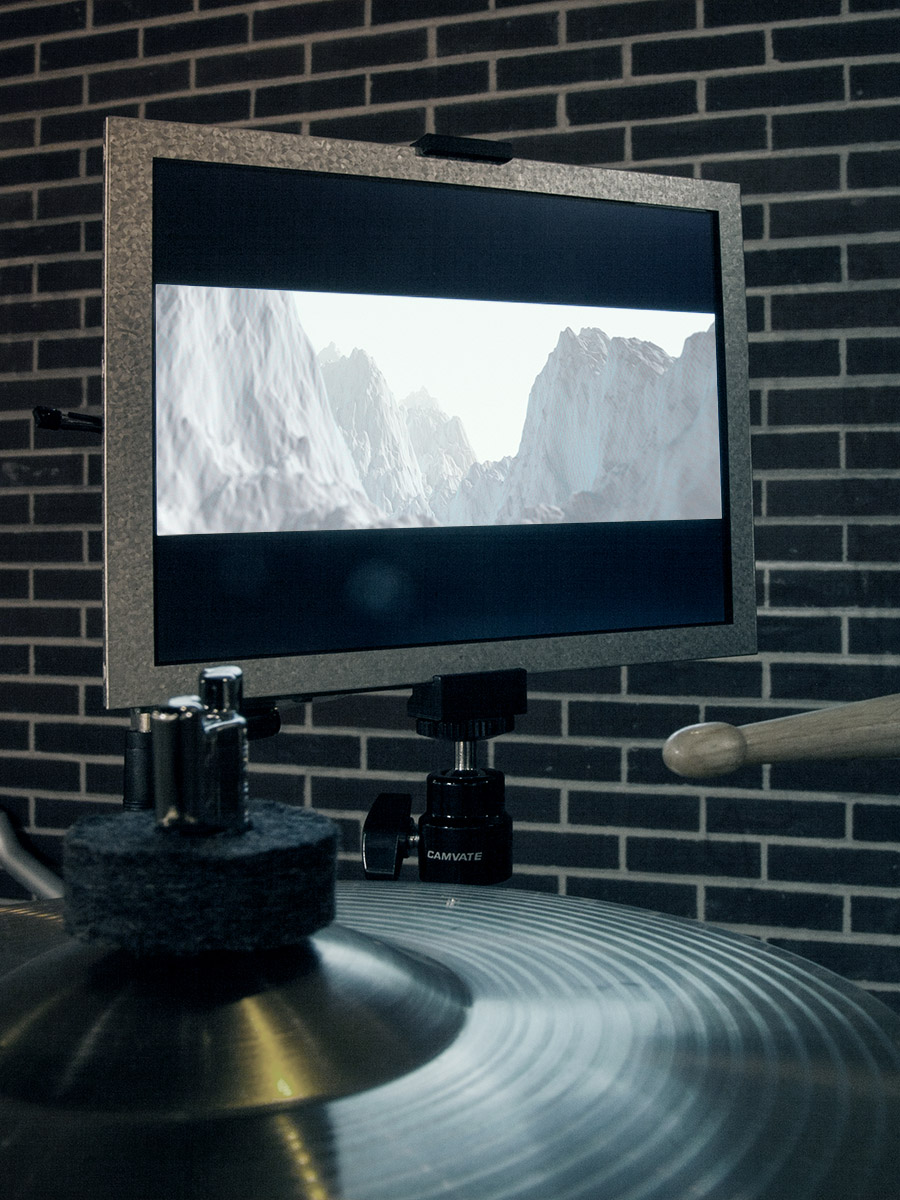
Don't Struggle for Air Where it Can't be Found
Kinetic installation with mild steel, drum stick, electronics, custom 3D prints, dimensions approx. 160 x 40 x 40 cm, 2022
Artwork produced in 2022 during Alfred University MFA degree study in the USA.
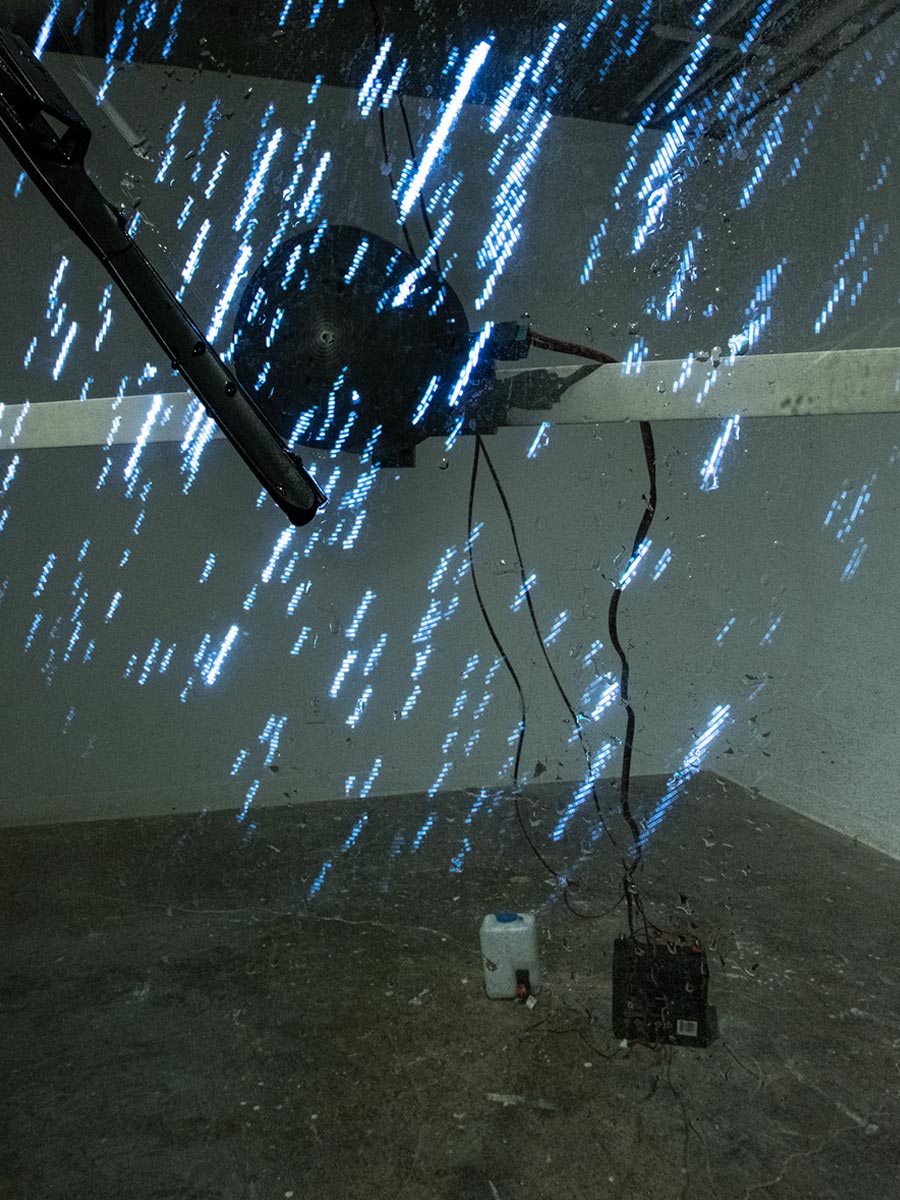
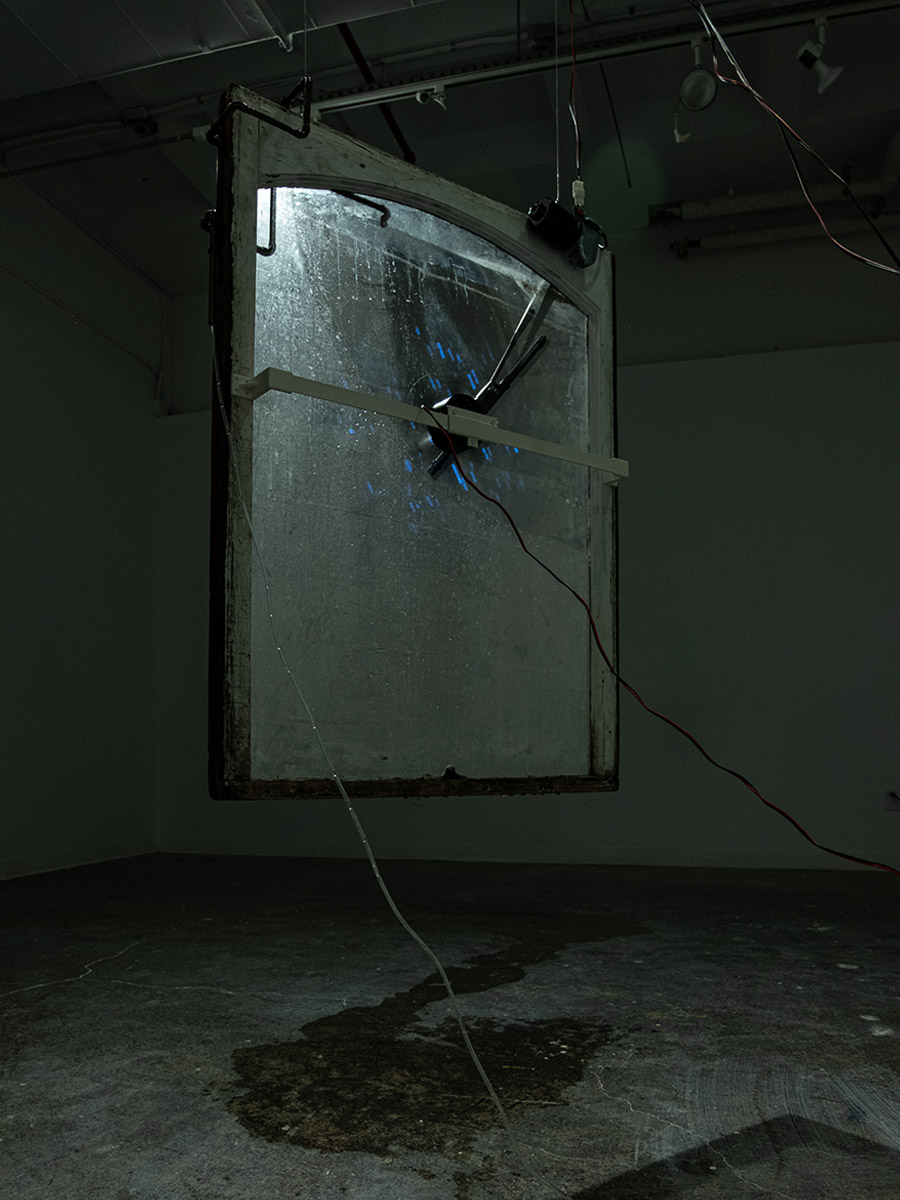
rain machine
Interactive installation with found objects, electronics, digital projection, water, dimensions approx. 1 x 2 x 2 meters, 2022
Artwork produced in 2022 during Alfred University MFA degree study in the USA.
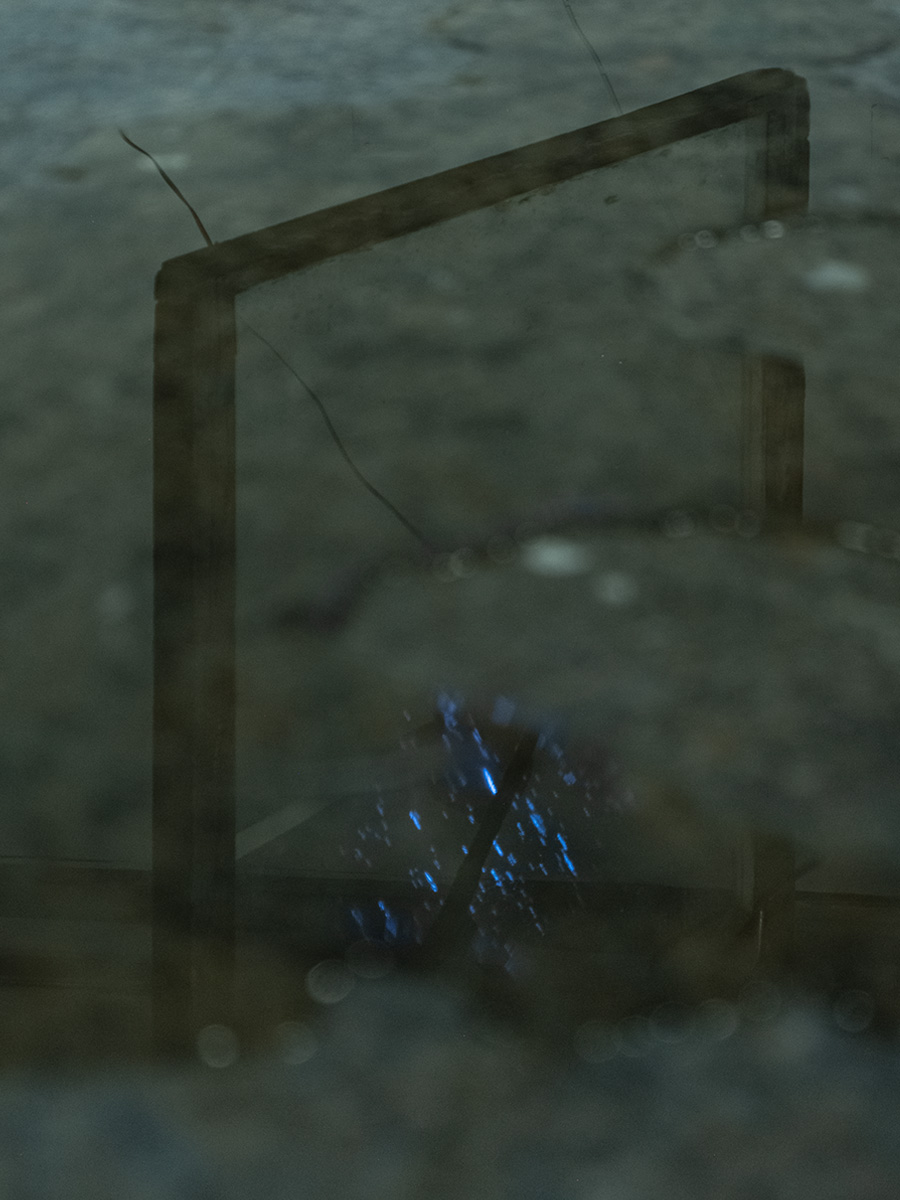
When the viewer enters, the system activates: water is dispensed across the glass as the wiper clears the droplets, which fall to the floor and form expanding puddles.
The work exists between simulation and reality, utility and futility. The viewer becomes both witness and trigger, activating the system that produces the illusion they observe, while the machine continues with indifferent persistence, maintaining a cycle that neither resolves nor progresses. Technologies once imagined as instruments of connection redraw the distances between people, alienating them within the systems meant to unite them.
Long Way From Home
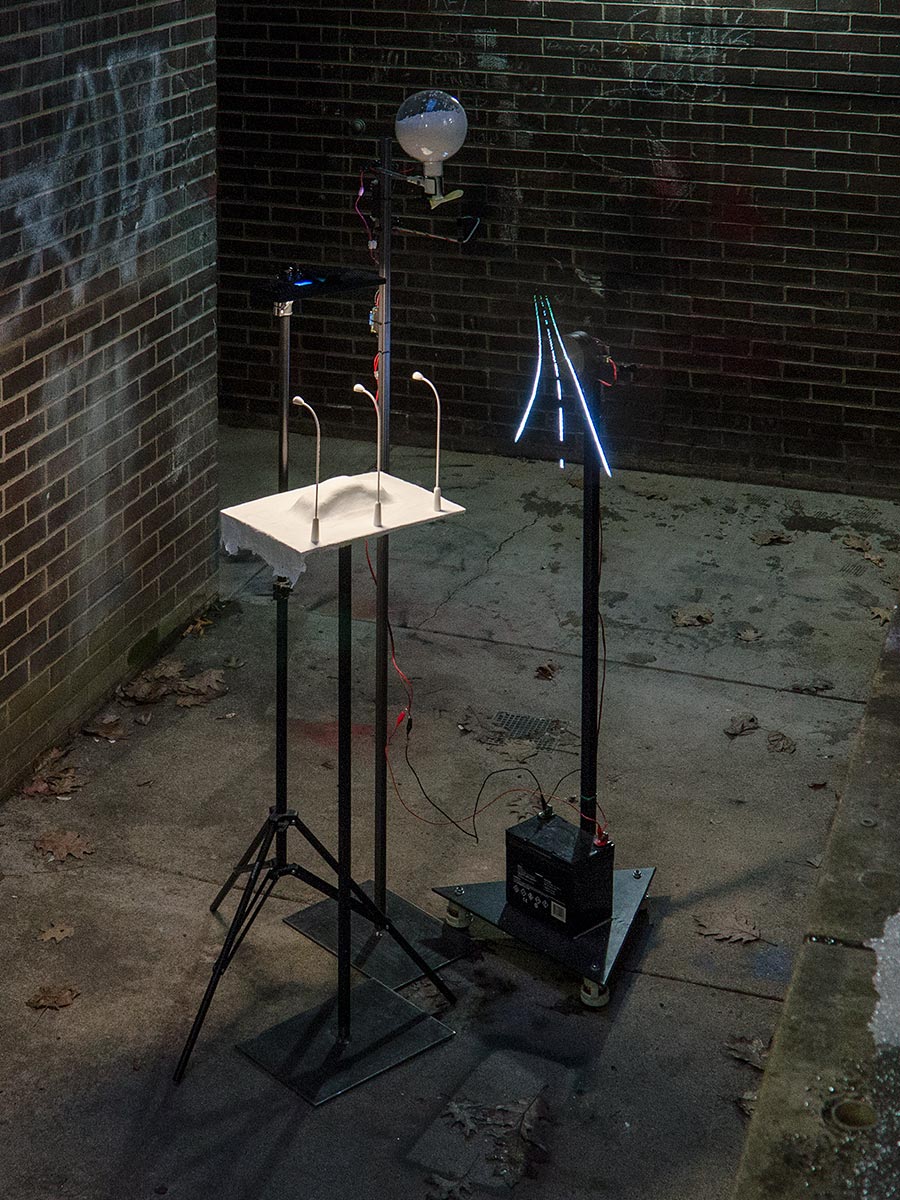
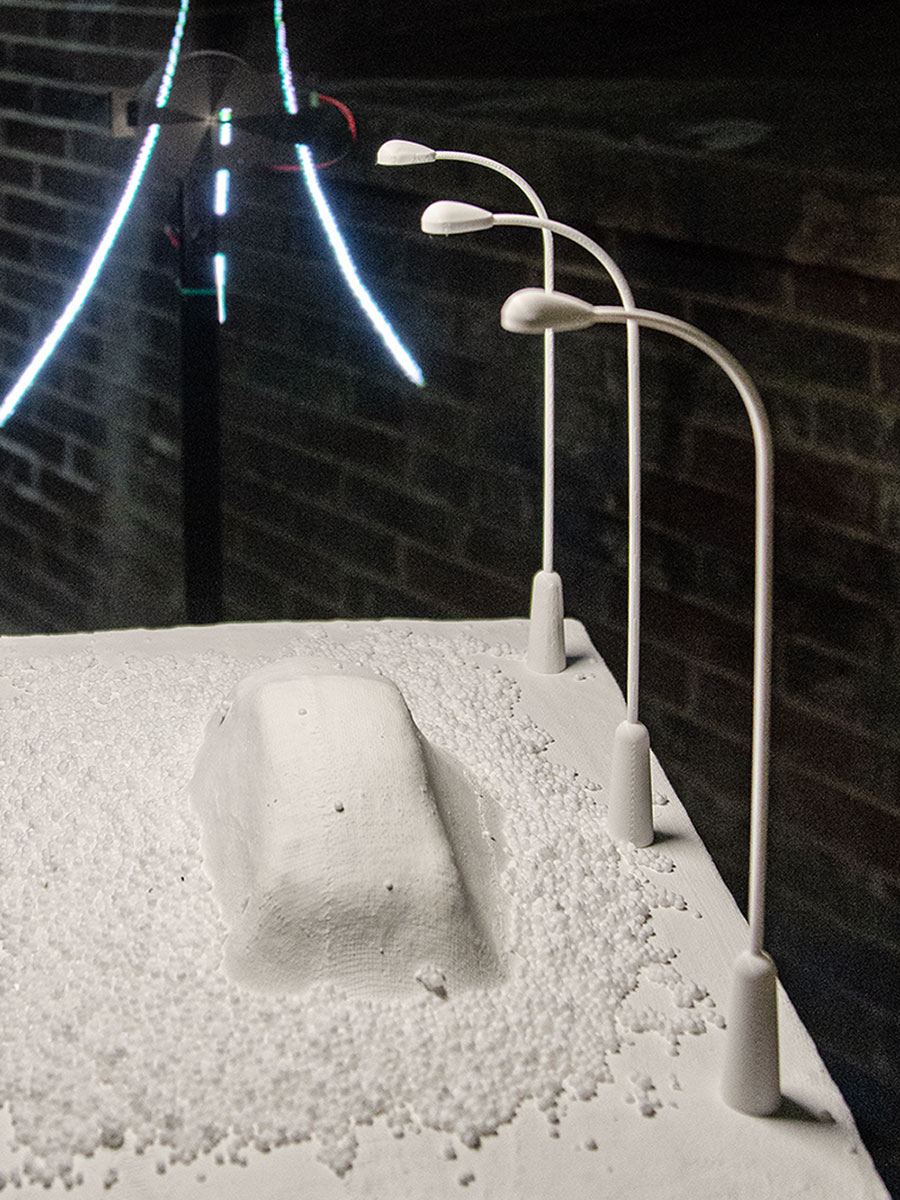
Kinetic installation with holographic projection, mild steel, plaster, 3D prints, polysterene beads, electronics, found objects, approx. 2 x 2 x 1 meters, 2021
Artwork produced in 2021 during Alfred University MFA degree study in the USA.
The installation stages a relatable everyday modern experience using tangible materials and ephemeral visual projections, encouraging viewers to navigate between different layers of perception. Contemporary technology blends our real experiences with fantasy, creating a perception that can feel similar to hallucination. This merging of reality and imagination is increasingly evident in how we interact with digital environments.
The installation forms part of an ongoing investigation into how sculpture can expand beyond static objects and incorporate timebased and immersive visual systems.
Artwork produced in 2021 during Alfred University MFA degree study in the USA.
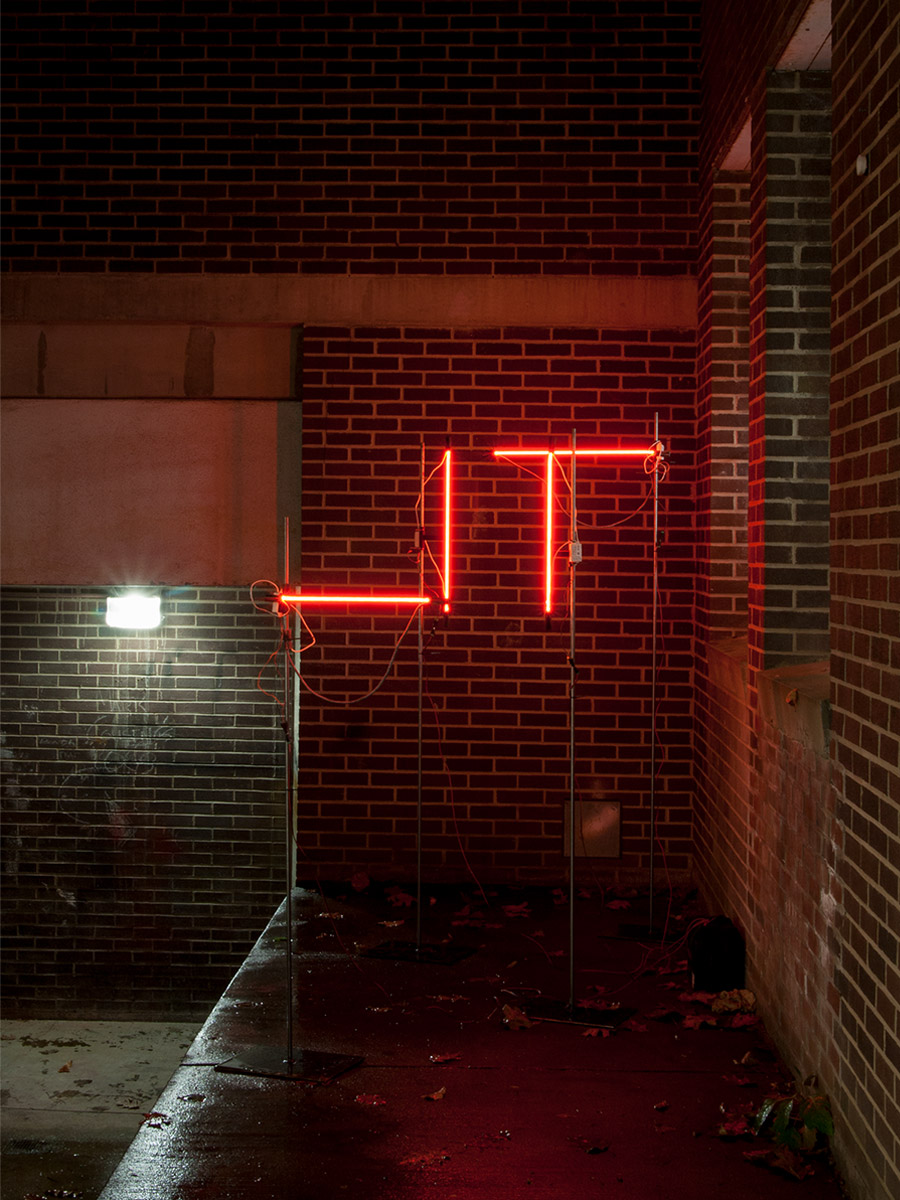
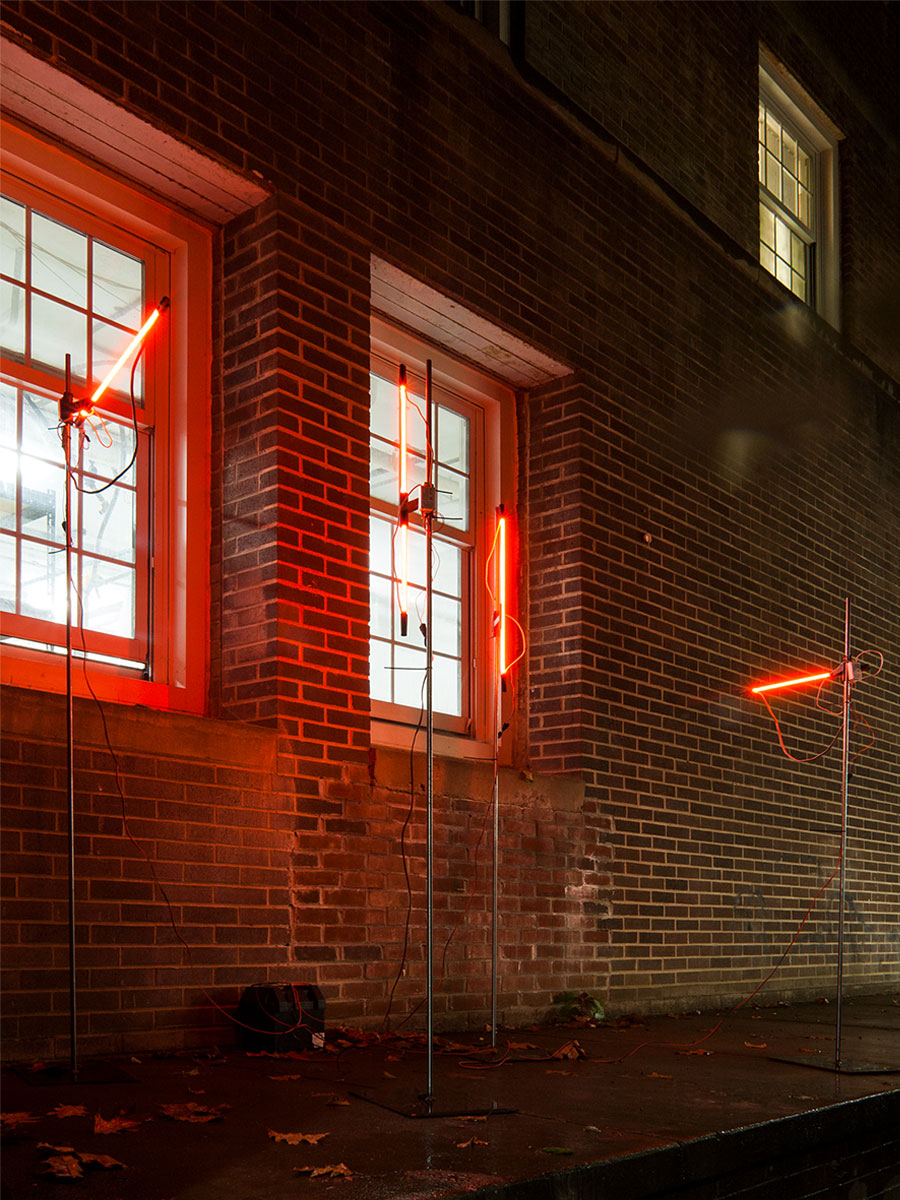
Charged with deception
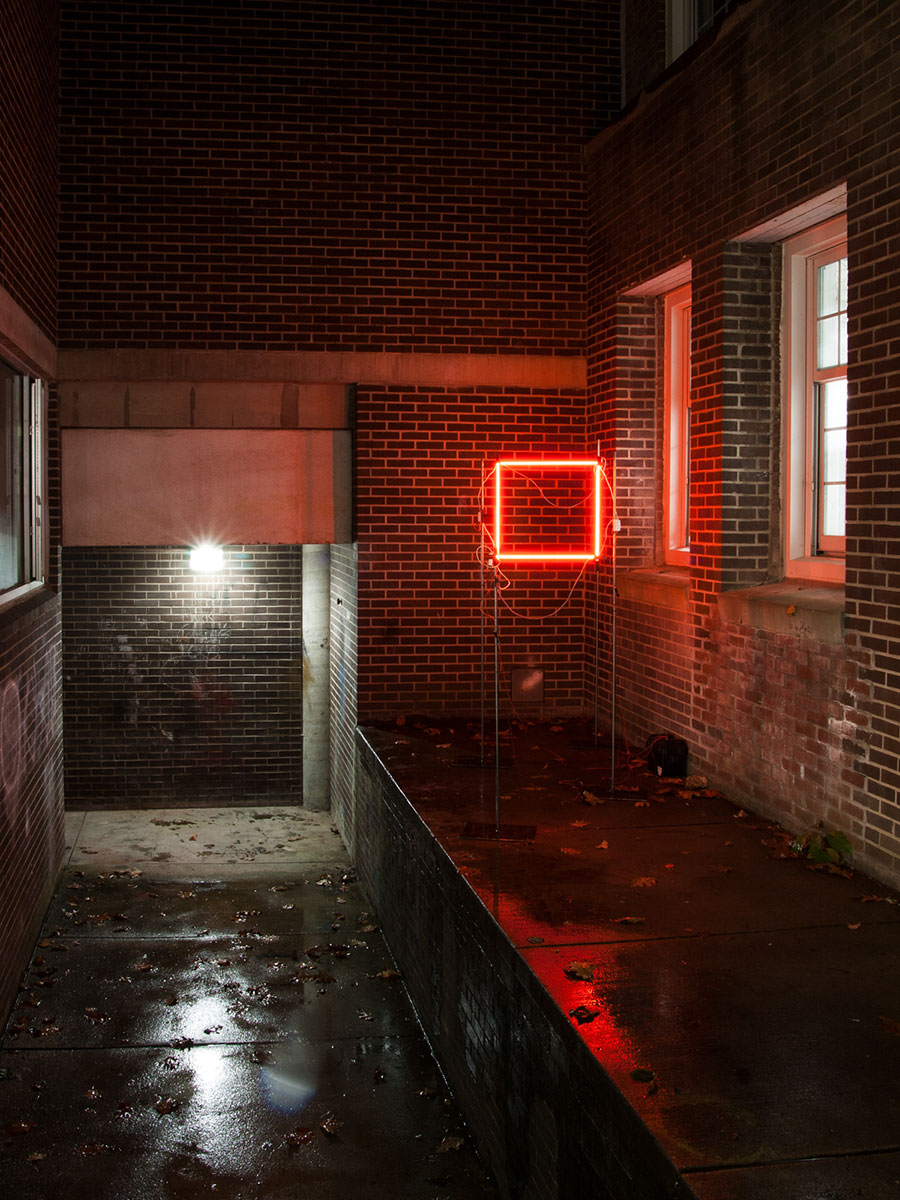
Anamorphic light installation with neon, mild steel, custom 3D prints, approx. 5 x 2 x 2 meters, 2021
Artwork produced in 2021 during Alfred University MFA degree study in the USA.
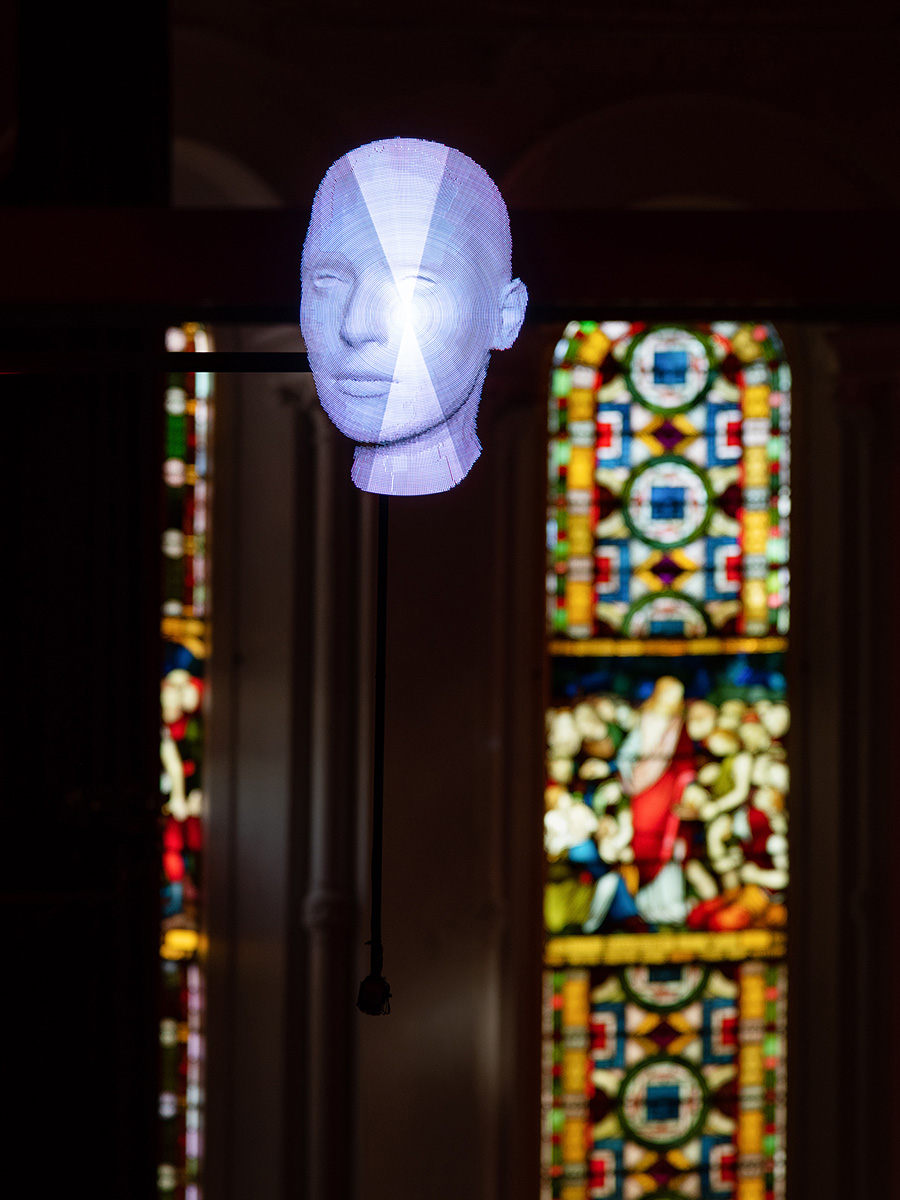
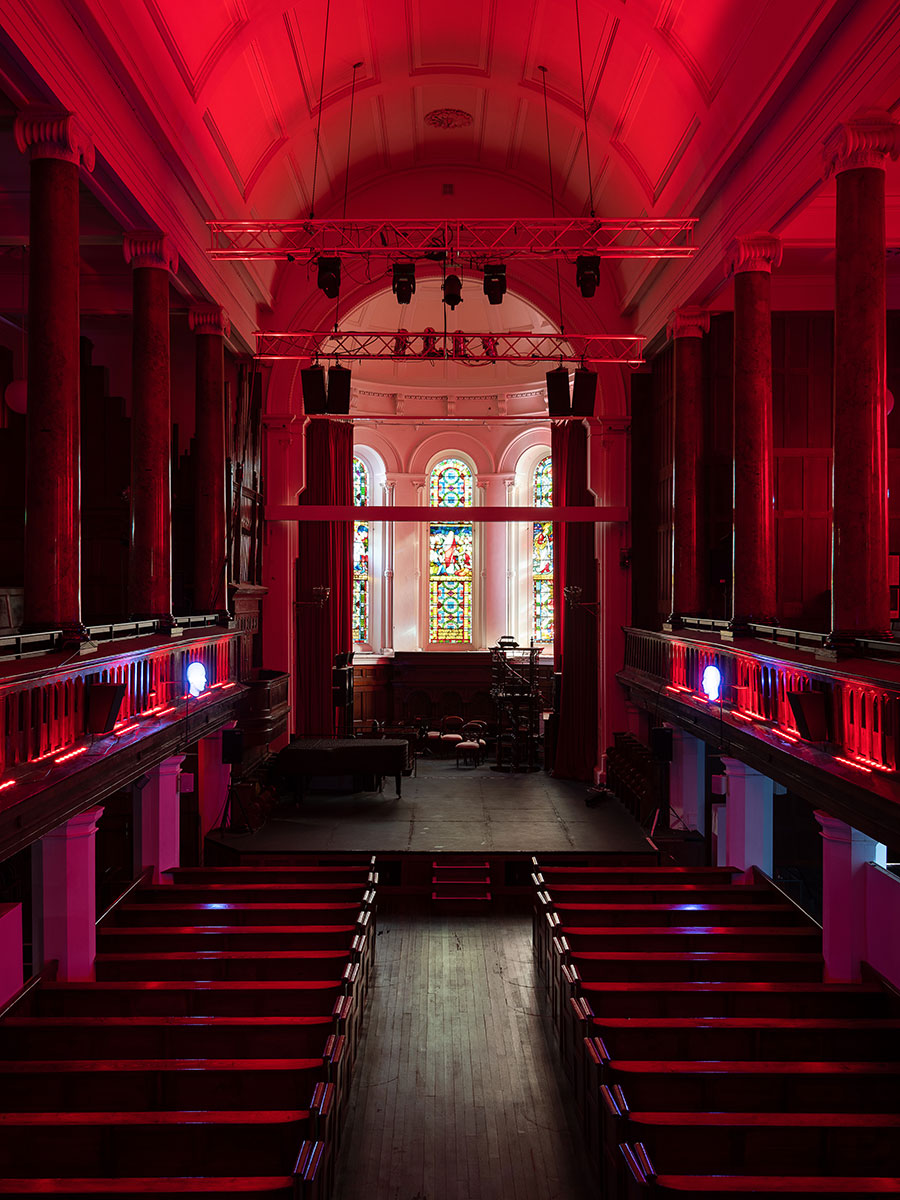
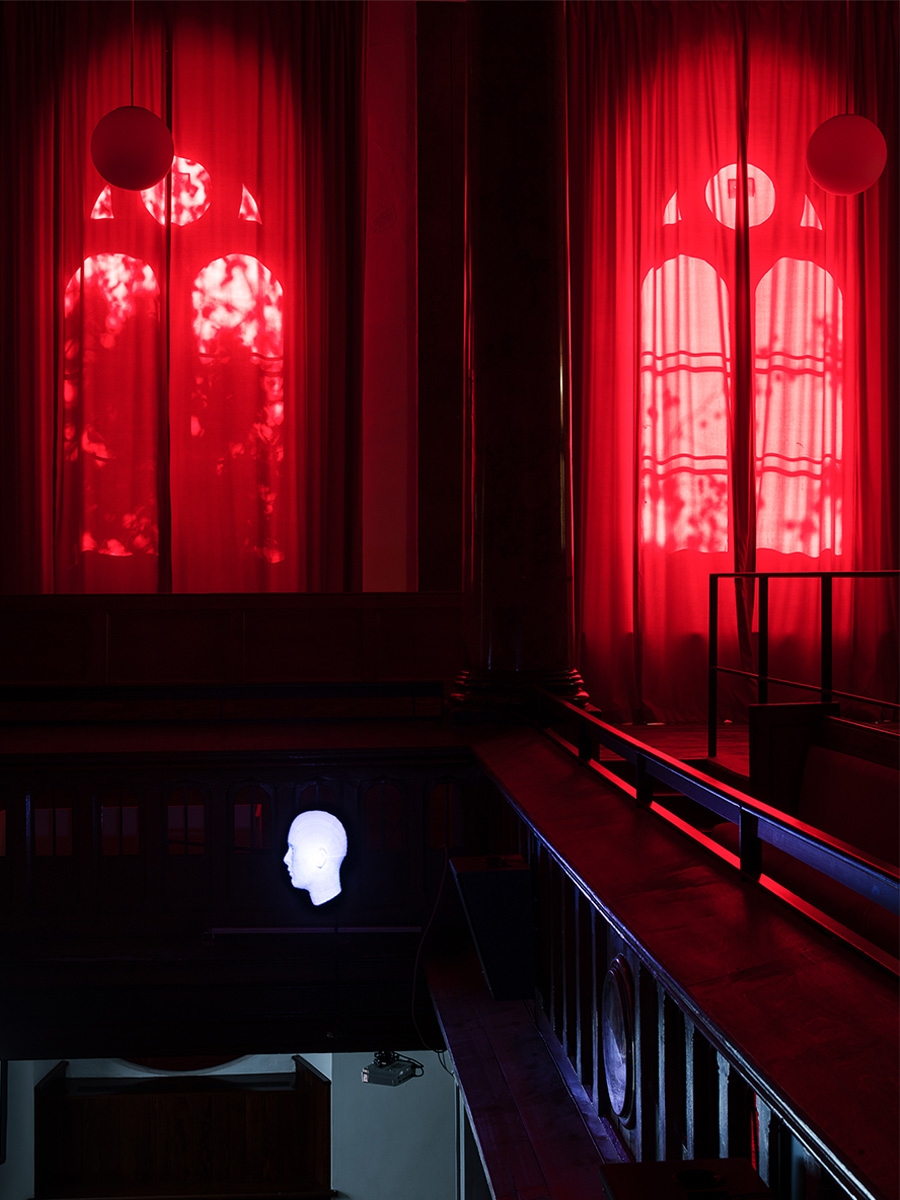
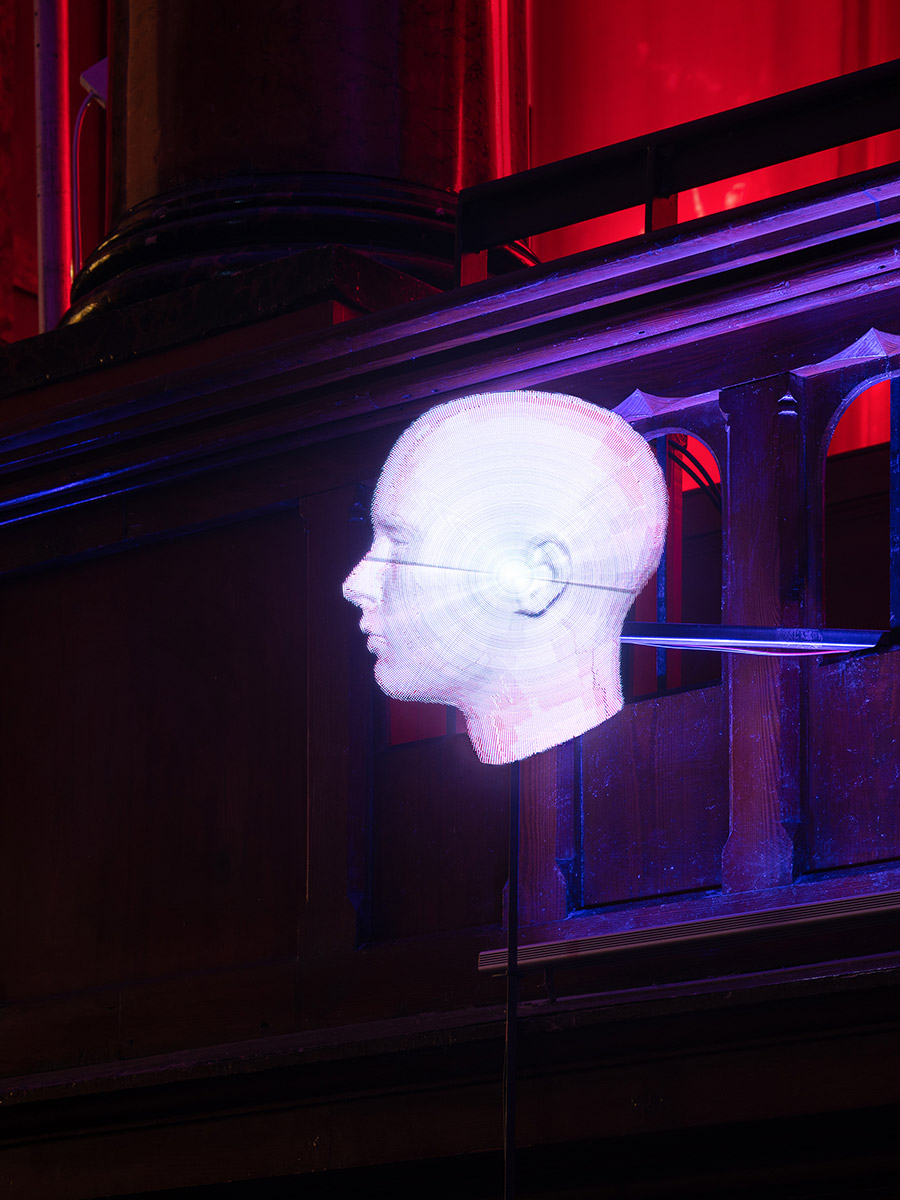
ENDUSER
Audio/visual installation with holographic projectors and sound, duration 3:50 minutes, dimensions variable, 2018; (photo credits venividiphoto.net)
The exhibition was produced with support or funding from Triskel Arts Centre, Valerie Gleeson Development Bursary, National Sculpture Factory, Cork City Council Arts Office and The Arts Council of Ireland./p>

Angular Oppressors I/II
Interactive installation, bricks, steel, electronic components, paper, sound, dimensions variable, 2016